Is the number different from what we expected?

A Fast Answer You Can
Defend Later
AI can identify a business issue in seconds. The next step is making sure your team can
understand the insight, evaluate the options, and act with confidence.
Predien provides decision infrastructure that connects business insights to the decisions they
inform. Evidence, recommendations, caveats, approvals, and outcomes stay connected, giving
leaders a clear record of how decisions were made.
Why Decision Governance Matters
An anomaly appears on the dashboard. The business needs to decide what to do next.
But the discussion often moves to emails, meetings, and spreadsheets. The evidence behind the insight gets
separated from the decision, and the reasoning can be difficult to track.
The signal arrives in seconds. The decision can take weeks, with no clear record of how it was made.
Later, leaders may not be able to answer:
What changed?
What options did we consider?
Why did we choose this option?
What outcome did we expect?
Did the result match our expectations?
A decision governance framework keeps the evidence, decision, and outcome connected, so business
leaders can act quickly and have a clear record of the decision.
Decision Making Analysis Starts
with the Right Signal
Predien checks your configured metrics for six types of changes:

Is it moving in a particular direction?
Is something unusual happening?
Are we likely to miss a target?
Are two metrics moving together?
Is this part of a recurring pattern?
From Insight to Decision with
a Governance Model
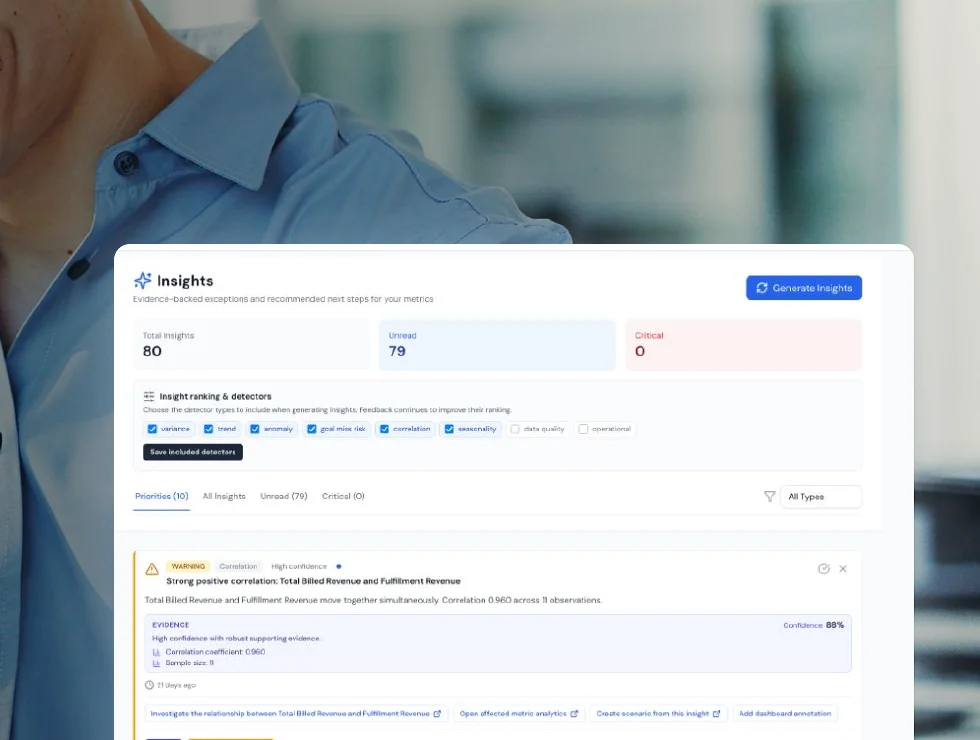
A correlation insight surfaces on the demo tenant. Total Billed Revenue and Fulfillment Revenue are moving
together, with a correlation of 0.960 across 11 observations.
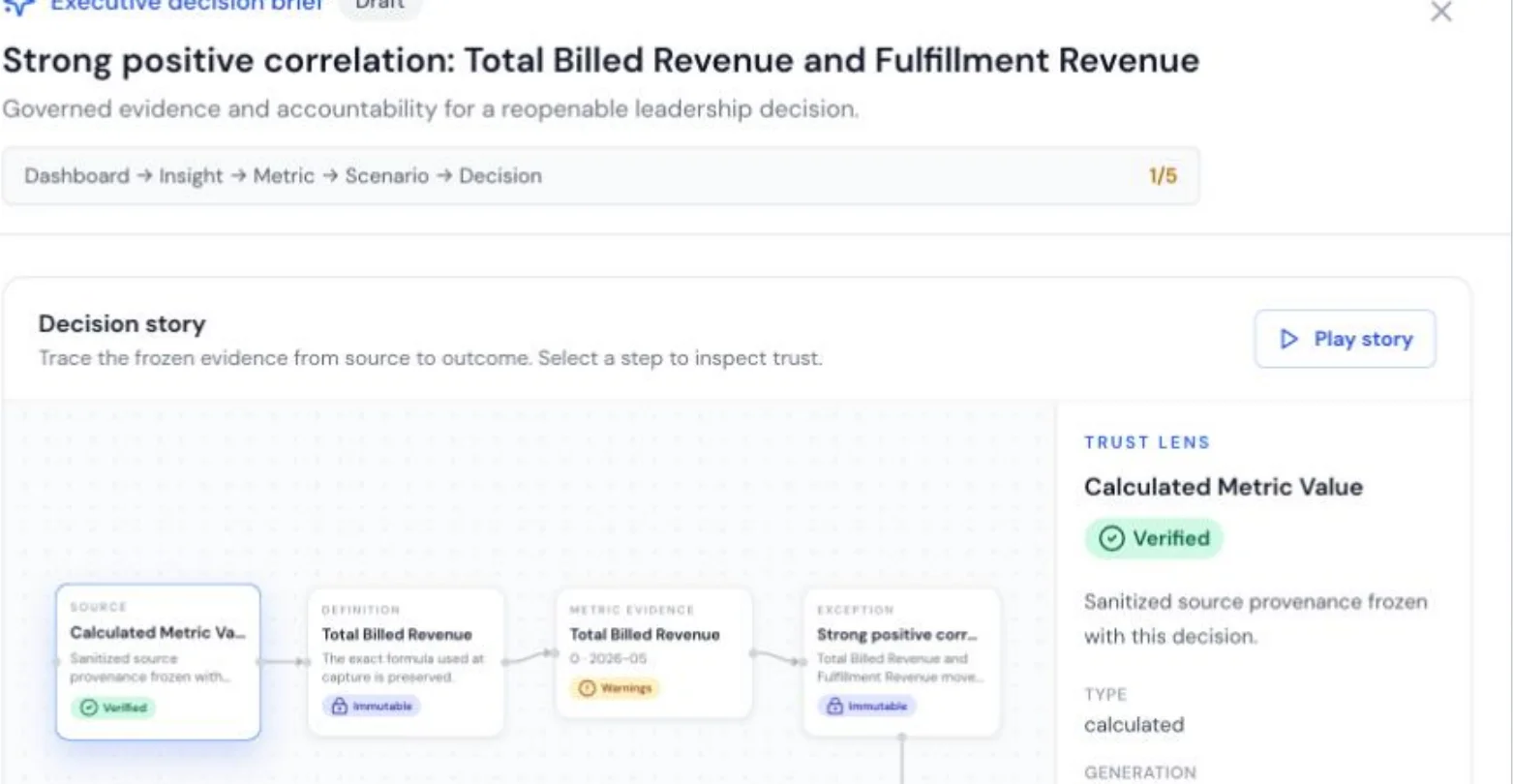
That insight becomes a decision brief. Your analyst writes the brief. The system enforces what it has to contain,
which is what turns a piece of analysis into a decision governance framework rather than a document someone
remembers to fill in.
When an insight becomes a decision brief, the underlying data is captured and protected. The numbers on the brief cannot be changed later.
Calculated metrics can be traced back to their component values and original source data, so they can be checked independently.
Each check shows whether it ran and includes its supporting evidence. If a check cannot run, the brief states that clearly.
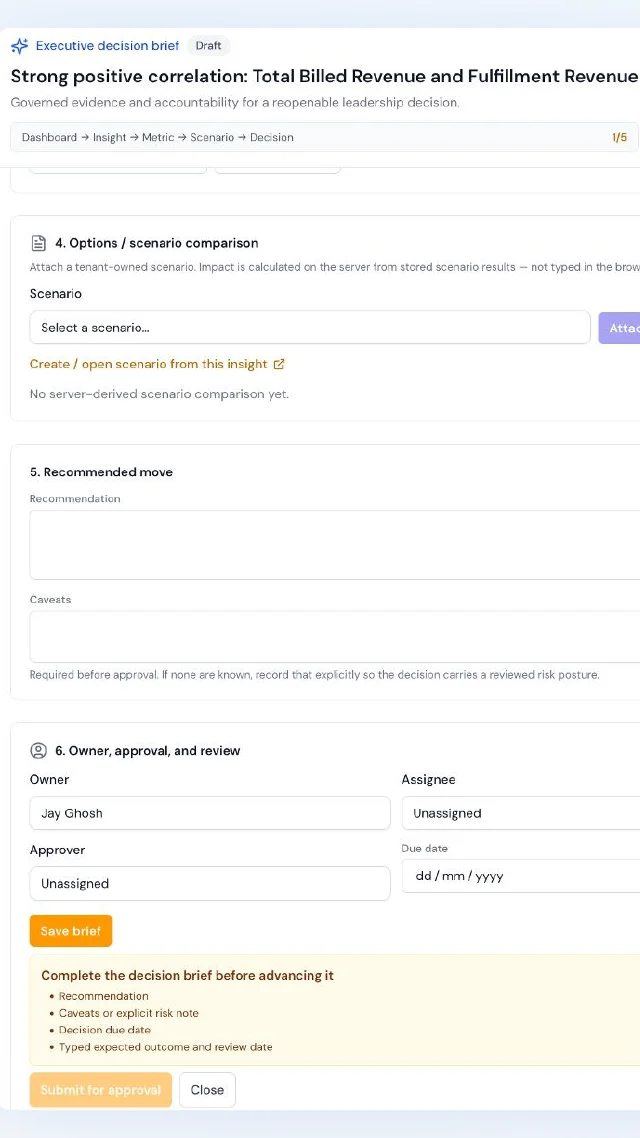
The comparison on the brief comes directly from stored scenario results. Impact numbers cannot be manually entered.
The analyst records the recommendation, and known limitations are shown before approval. If there are no known caveats, that is recorded too.
Before approval, the brief records what the team expects to happen and when the result will be reviewed.
The brief records who recommended the decision, who approved it, and when it will be reviewed.
Predien reads from your business systems. It records the decision without changing your ERP, workforce, billing, or other source systems.
Outcome Tracking for
Better Decision Making Analysis
A decision should not end when it is approved.
Predien tracks what happens after the decision so your team can see whether the expected result matches the
actual result. This creates a continuous decision making analysis process based on real business outcomes.
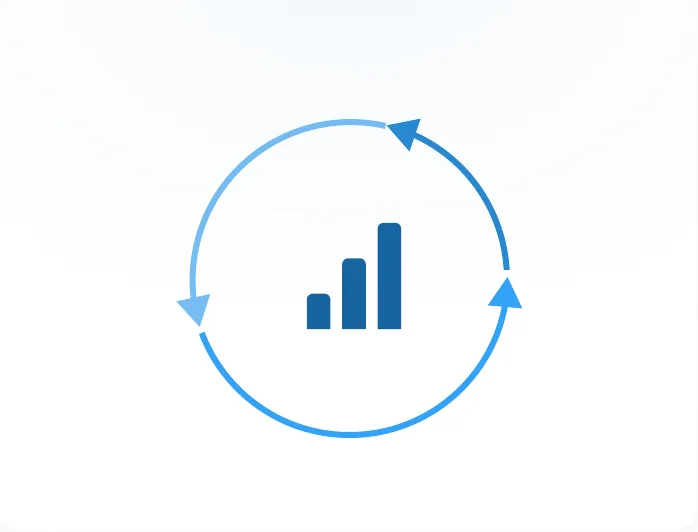
The outcome replay closes the loop in five steps.
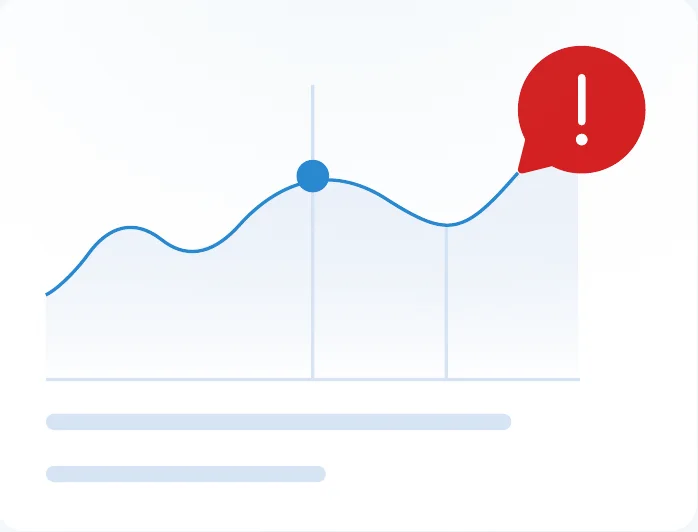
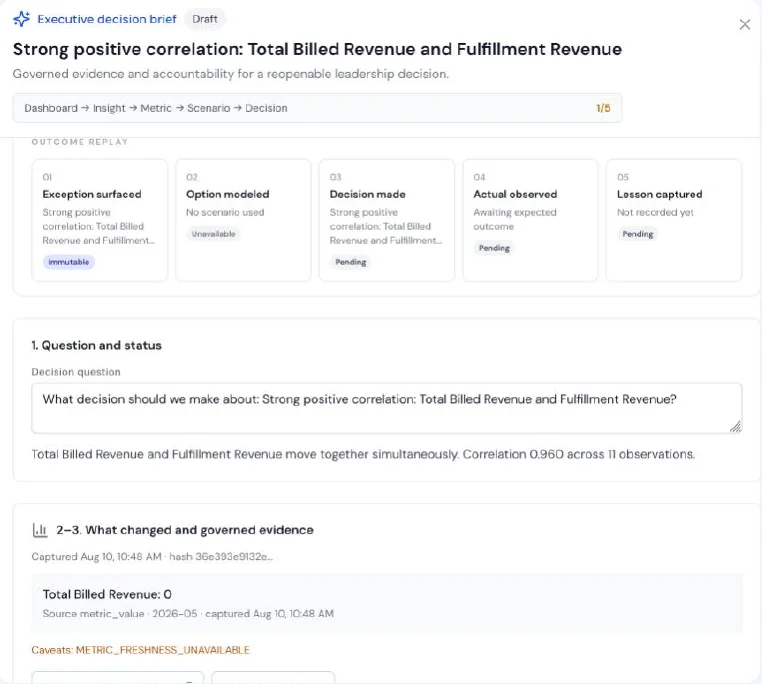
Exception surfaced
The platform detects the anomaly and publishes an insight.
Option modeled
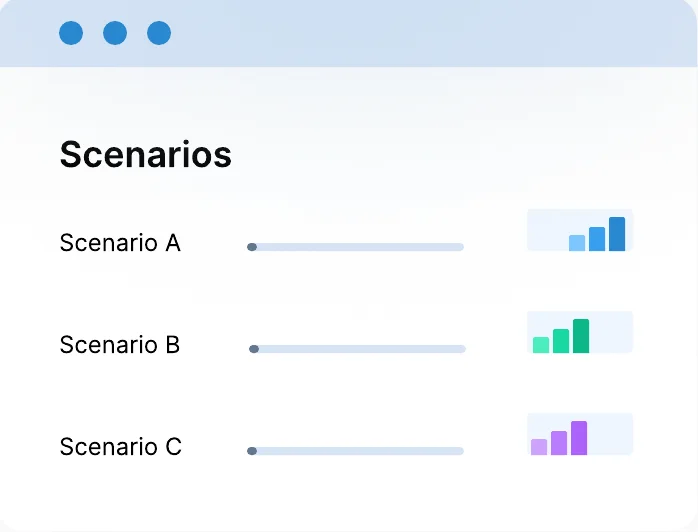
Scenarios are run and compared on your own business data.
Decision made
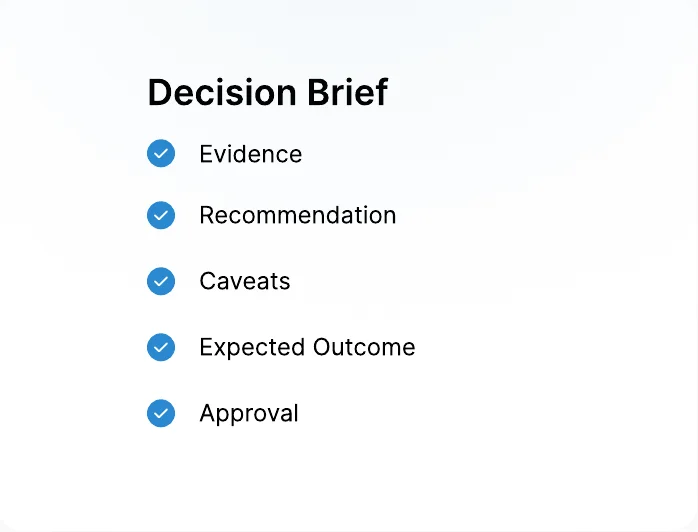
The brief records the evidence, recommendation, caveats, expected outcome, and approval.
Actual result
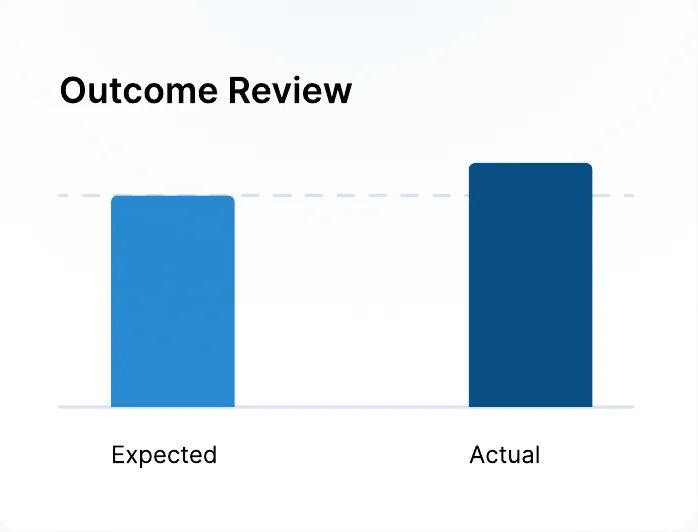
At the review date, actual results are compared with what was expected.
Lesson captured
The gap between what you expected and what happened is recorded, and it feeds the decision making analysis behind the next call.
The signals are imperfect. This loop is how they get more reliable.
Decision Governance From Insight to Outcome
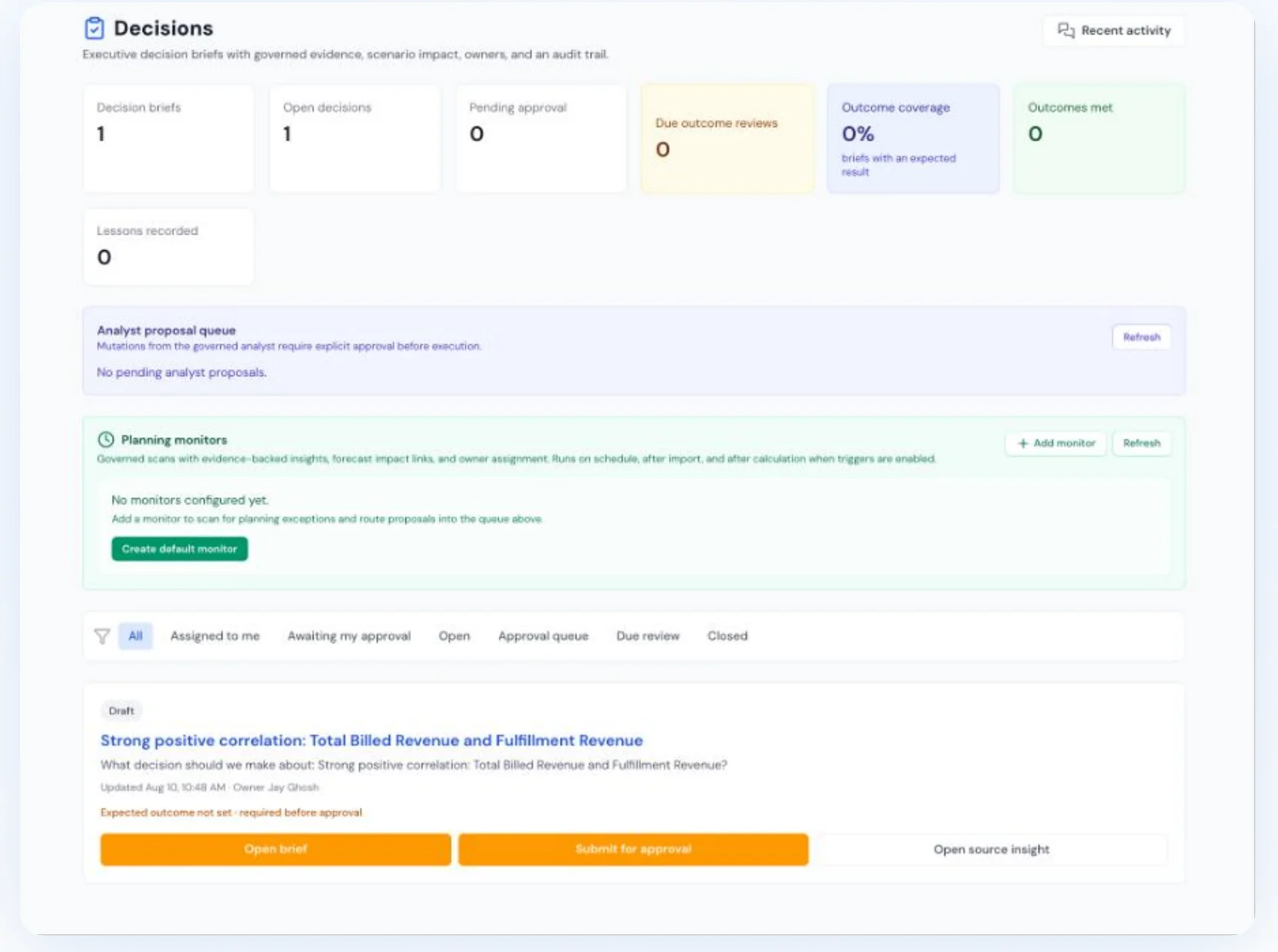
Analyst proposals go into a queue and need your explicit approval before anything runs. The platform's access to
your systems is read-only. Your forward deployed analyst carries the fact-checking, and any calculated metric drills
down to its component values and source rows, so the work can be verified independently at every step.
Decision governance is not a report you receive at the end. It is the standard every insight, every brief, and every
recommendation on the platform has to clear before it reaches you.
Bring the decision you are
weighing right now
See it tested on your own business numbers before you commit.
Who this is for
Predien is built for mid-market leaders whose business has outgrown their current analytical capabilities.
What happens next
Email one line with the decision you are weighing. It goes to the person who would run your Sprint, and they come back within one business day.
