

How Predien Works: The
Decision Intelligence Platform
Predien is a predictive intelligence software that helps operationally complex businesses move from business signals to analysis, scenarios, decisions, and measurable outcomes.
How a Decision Intelligence
Platform Works
Growing mid-market warehouses, 3PLs, logistics businesses, and other operationally complex companies often reach a point where standard reporting can no longer keep up. Multiple sites, customers, facilities, and operating variables make important decisions harder to manage.
Predien is a decision intelligence software that brings data, analysis, models, and business context together. A forward deployed analyst works alongside your team, helping maintain the analysis and scenarios as your operation changes.

AI Decision Intelligence

Live Scenario Simulation

Proactive Data Quality
Decision Intelligence Capabilities That Move Businesses Forward

See what changed across your business
Predien monitors your configured metrics continuously, surfacing meaningful changes so your team knows where attention is needed.
Understand what is driving the change
Your forward deployed analyst reviews the signals, connects the relevant business drivers, and explains what the numbers mean for your operation.
Model the choices before you decide
Predien uses your business numbers to compare the options in front of you and show their potential impact on cost, capacity, margin, and performance.
Keep the decision connected to the outcome
Your decision, scenario, reasoning, expected outcome, and review date stay together, so your team can measure what happened afterwards.
The Three Connected Layers of Predien
Predien connects the data, business insight, and decision layers so your team can move from operational information to clear, decision-ready analysis.
Data Layer
Builds the foundation for understanding your business and the numbers behind it.
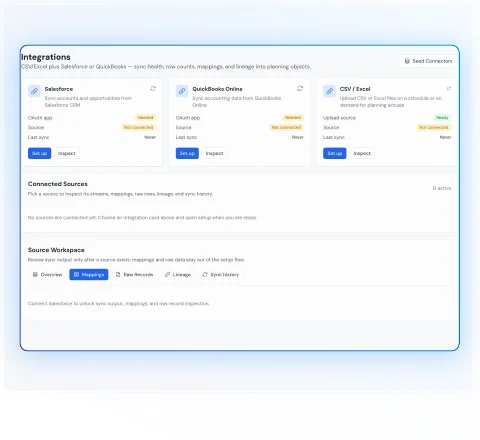
Bring your existing operational and financial data into one working model.
Structure the data around how your business actually operates.
Keep the model current as your business, metrics, and operating needs change.
Business Insight Layer
Provides clear findings from business changes so your team can understand and act on them.
Track the metrics that matter and surface meaningful changes.
Understand what changed, what is driving it, and why it matters.
Focus on the findings that need attention and could affect the decision.
Decision Layer
Connects the analysis and scenarios so your team can make and record the decision.
Test the choices you are considering using your own business numbers.
See how each option could affect cost, revenue, capacity, margin, or other key measures.
Record the decision, reasoning, expected outcome, owner, and review date.
Built For The Leaders
Making The Decisions
Given the complexity of these decisions, Predien gives each business function a clear way to work with the same analysis while staying focused on its own priorities.
CEOs
Get a clear view of the business decisions that matter and the potential impact of the choices in front of you.
- Growth: Evaluate decisions as the business adds customers, facilities, or volume.
- Performance: Connect operational changes to broader business outcomes.
- Decision-making: Review the analysis, options, and expected outcomes behind important decisions

CFOs
Connect operational performance to financial outcomes and make decisions with the numbers behind the business.
- Cost and margin: Understand where operating costs are affecting margins.
- Financial planning: Evaluate the financial impact of operational choices.
- Business performance: Give financial decisions the operating context behind the numbers.
COOs
Use operational data and scenario analysis to make faster decisions across the business.
- Operations: See what is changing across sites and functions.
- Capacity and labor: Compare staffing and capacity choices before committing resources.
- Performance: Understand the drivers behind changes in throughput, productivity, and operating costs.
Operations & Supply Chain Leaders
For VP Operations, VP Supply Chain, Heads of Warehouse Operations, Continuous Improvement, and Network or Capacity Planning.
- Labor: Compare overtime, headcount, and workforce choices.
- Capacity: Model volume, facility, and network decisions.
- Performance: Understand changes in throughput, productivity, cost, and service levels.
Bring the decision you are
weighing right now
See it tested on your own business numbers before you commit.
Who this is for
Predien is built for mid-market leaders whose business has outgrown their current analytical capabilities.
What happens next
Email one line with the decision you are weighing. It goes to the person who would run your Sprint, and they come back within one business day.
